Atheism vs. Islam: A Comparative Exploration
Introduction
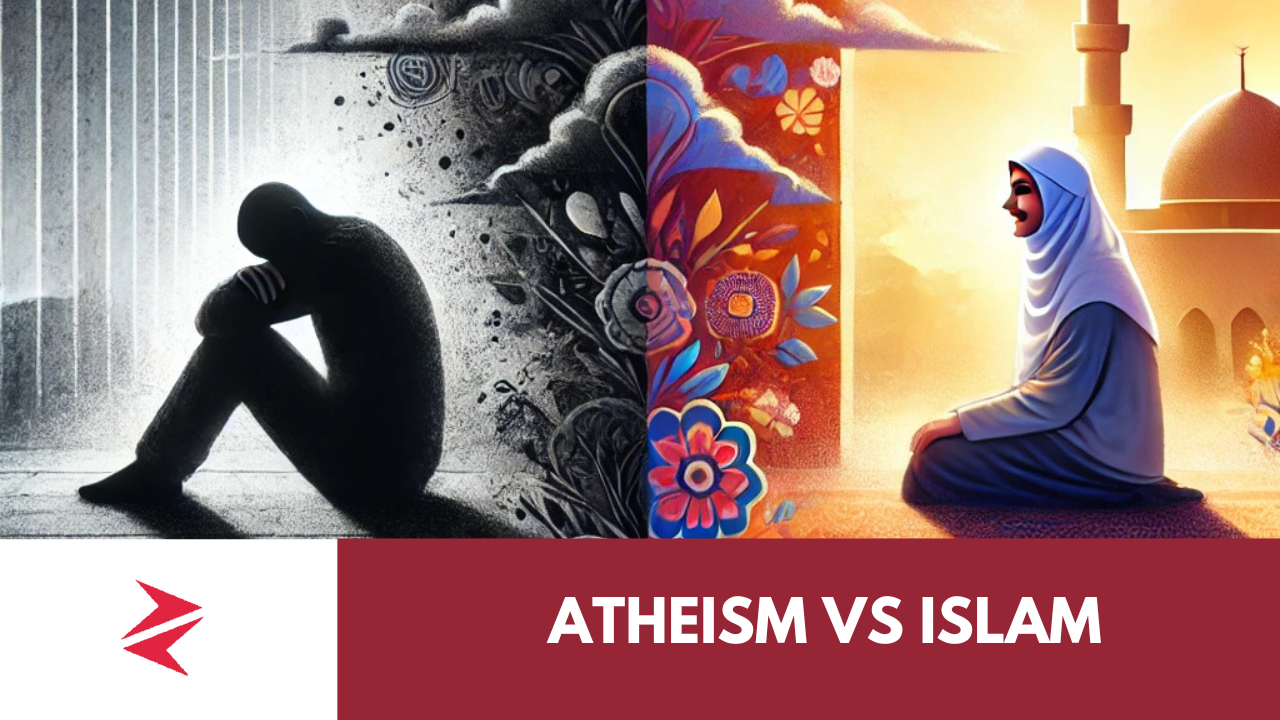
Atheism and Islam symbolize two essentially distinctive worldviews concerning the existence of God and the character of fact. Whilst atheism is the absence of belief while in the existence of deities, Islam is amongst the earth's important monotheistic religions, centered across the belief in a single God (Allah) along with the teachings from the Prophet Muhammad as outlined inside the Quran. This article delves into these Views, exploring how they might relate to Isaac Newton's notion of your "clockwork universe" together with other historic and philosophical contexts.
Isaac Newton's Clockwork Universe
Isaac Newton's idea on the universe as a superbly ordered device, normally described as the "clockwork universe," posits the universe operates Based on rules that could be comprehended by means of mathematics and science. This look at will not explicitly assist atheism or Islam but is interpreted in various strategies:
Atheistic Interpretation: Some atheists may interpret Newton's universe being a self-sustaining mechanism that needs no divine intervention soon after its development, if it absolutely was designed whatsoever. This aligns which has a naturalistic worldview the place natural legislation govern every little thing without the need of supernatural interference.
Islamic Interpretation: From an Islamic perspective, the clockwork universe could be viewed as proof of God's generation, where the regularity and order from the universe are signs of Allah's omnipotence and wisdom. The Quran alone encourages contemplation on the organic environment as a means to be aware of God's power and style.
Atheism and Islam in Context
Core Beliefs:
Atheism: Atheists tend not to believe in any gods. Their worldview may be according to scientific materialism, philosophical skepticism, or just an absence of belief stemming from various own or intellectual explanations.
Islam: Muslims believe in just one God, Allah, whose will and commandments are exposed with the Quran. This perception method encompasses rituals, laws, and a comprehensive worldview such as the afterlife, moral ethics, and Group life.
Philosophical Stance:
Atheism: Typically entails a rejection of supernatural explanations in favor of empirical evidence and rational believed. Atheists could possibly argue which the universe could be stated without invoking a deity.
Islam: Emphasizes religion, divine revelation, as well as the unseen globe. Muslims have confidence in For More Info miracles, angels, and divine intervention on the planet, which happen to be integral for their knowledge of existence.
Historical Figures and Religious Beliefs
Benjamin Franklin along with the Constitutional Conference: Franklin, although additional of the Deist, performed a key purpose while in the convention by advocating for ethical virtues and unity, which indirectly influenced the secular nature of the U.S. Constitution, though not advertising atheism directly.
Religion with the Signers from the Declaration of Independence: Most signers ended up Christians, with a substantial quantity Keeping Deist views. This range underscores the muse of religious freedom within the U.S., where atheism wasn't a major public stance at some time.
Thomas Jefferson's Views: Jefferson, while not an atheist, championed separation of church and condition, influencing the secular governance design, which can be found as paving the way in which for atheistic or non-religious governance.
Definitions and Variances
Agnostic vs. Atheist: An agnostic might believe that the existence of deities is mysterious or inherently unknowable, Whilst an atheist lacks belief in deities, typically resulting from an absence of proof or philosophical conviction.
Perception in God without Religion: This is commonly termed as "spiritual although not spiritual," exactly where folks believe in an increased ability or divine essence but don't align with institutionalized religion's This might interest you tactics or doctrines.
Conclusion
The exploration of atheism vs . Islam with the lens of Newton's clockwork universe, historic contexts, and philosophical distinctions provides a loaded tapestry of how distinctive worldviews perceive and communicate with the strategy of God, the universe, and human existence. Though atheism and Islam provide starkly contrasting views on divinity, their engagement Together with the purely natural earth and philosophical inquiry into existence reveals a complexity that transcends basic perception or disbelief, illustrating the multifaceted character of human imagined about the cosmos.